QR Codes vs NFC: Choosing the Right Carrier
The honest trade-offs between QR codes and NFC tags for connected packaging and Digital Product Passports.
Key points
- Near-zero unit cost — printed with normal artwork
- Cryptographic variants defeat cloning
- High-volume FMCG: QR codes on pack
- Durability matched to product lifecycle
Contents
Two Carriers, One Goal: Linking Physical to Digital
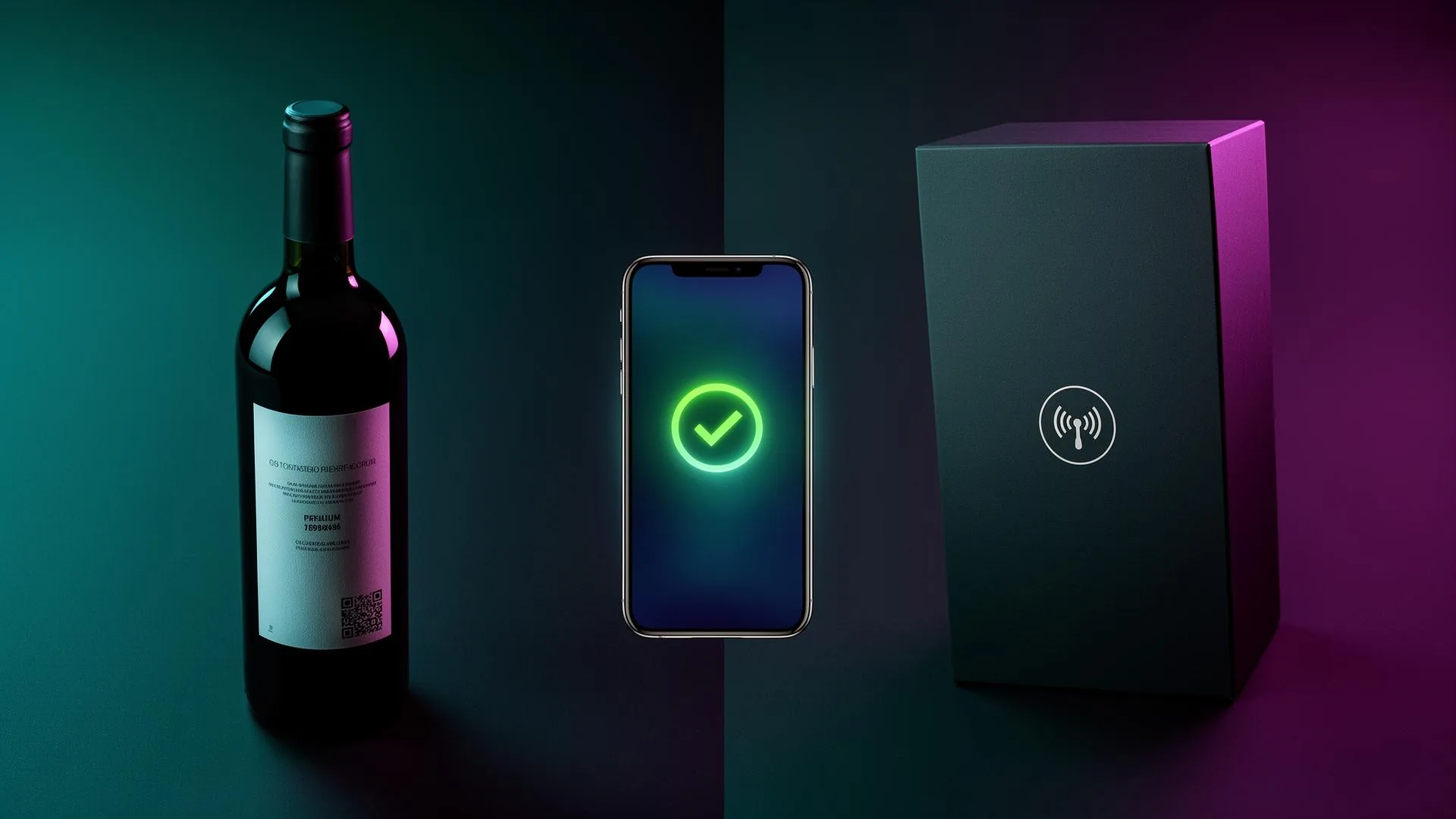
Connected packaging needs a data carrier — a printable QR code or a programmable NFC tag — to bridge the physical product and its digital twin. Both work; the right choice depends on cost, use case, durability, and consumer experience.
This guide unpacks the trade-offs and helps you pick the right carrier (or mix of carriers) for your product. Both resolve through the same GS1 Digital Link layer.
- QR codes: printed, universally scannable, low cost
- NFC tags: tap-to-access, programmable, tamper-resistant
- Both can carry GS1 Digital Link URIs
- Many brands use both — QR for reach, NFC for premium experiences
QR Codes: Strengths and Limitations
QR codes are essentially free at the point of production — they're printed alongside the rest of the artwork. Any smartphone camera can read them, with no app required. They scale to billions of units effortlessly.
The trade-offs are physical: QR codes can be copied, damaged, or printed onto fake packaging. They also require line of sight and a clear scan, which can be awkward for some product formats.
- Near-zero unit cost — printed with normal artwork
- Universal device support, no app required
- Scales to billions of units trivially
- Vulnerable to copying without serialisation and verification
- Requires line of sight and lighting to scan
Choosing the Right Carrier by Use Case
There's no one-size answer. Map your use cases to carrier strengths: high-volume food & beverage SKUs that need DPP compliance and consumer storytelling? QR codes printed on pack. Luxury goods, premium electronics, or pharmaceuticals where authentication is critical? Cryptographic NFC. Durable goods built to last decades, like outdoor equipment? Embedded NFC.
Many brands deploy both — QR for the carton, NFC inside the product — and resolve them to the same product twin in the SmartLinks Hub.
- High-volume FMCG: QR codes on pack
- Premium / luxury: cryptographic NFC
- Durable goods: embedded NFC for lifetime access
- Hybrid: QR for reach + NFC for premium SKUs
Designing for Compliance and Consumer Experience
Whichever carrier you choose, the deployment must satisfy regulatory requirements (durability, persistence, accessibility) and consumer expectations (instant response, mobile-optimised, multi-language). Both QR and NFC can meet these requirements when implemented thoughtfully.
SmartLinks handles the encoding, resolution, and content delivery for both carriers — brands focus on the experience, not the infrastructure.
- Durability matched to product lifecycle
- Mobile-first, sub-second response times
- Multi-language and audience-aware content
- Centralised analytics across both carrier types
Get Started with the Right Mix
Most brands begin with QR codes — fast, cheap, broadly applicable — and add NFC where the use case demands. SmartLinks supports both within a single platform, so you can shift the mix as your programme matures without ripping and replacing.
Talk to our team about the right starting point for your product mix and counterfeit risk profile.
- Start with QR for breadth; add NFC for depth
- Single platform handles both carrier types
- Phase carriers in line with risk and unit economics
- No platform migration as you scale