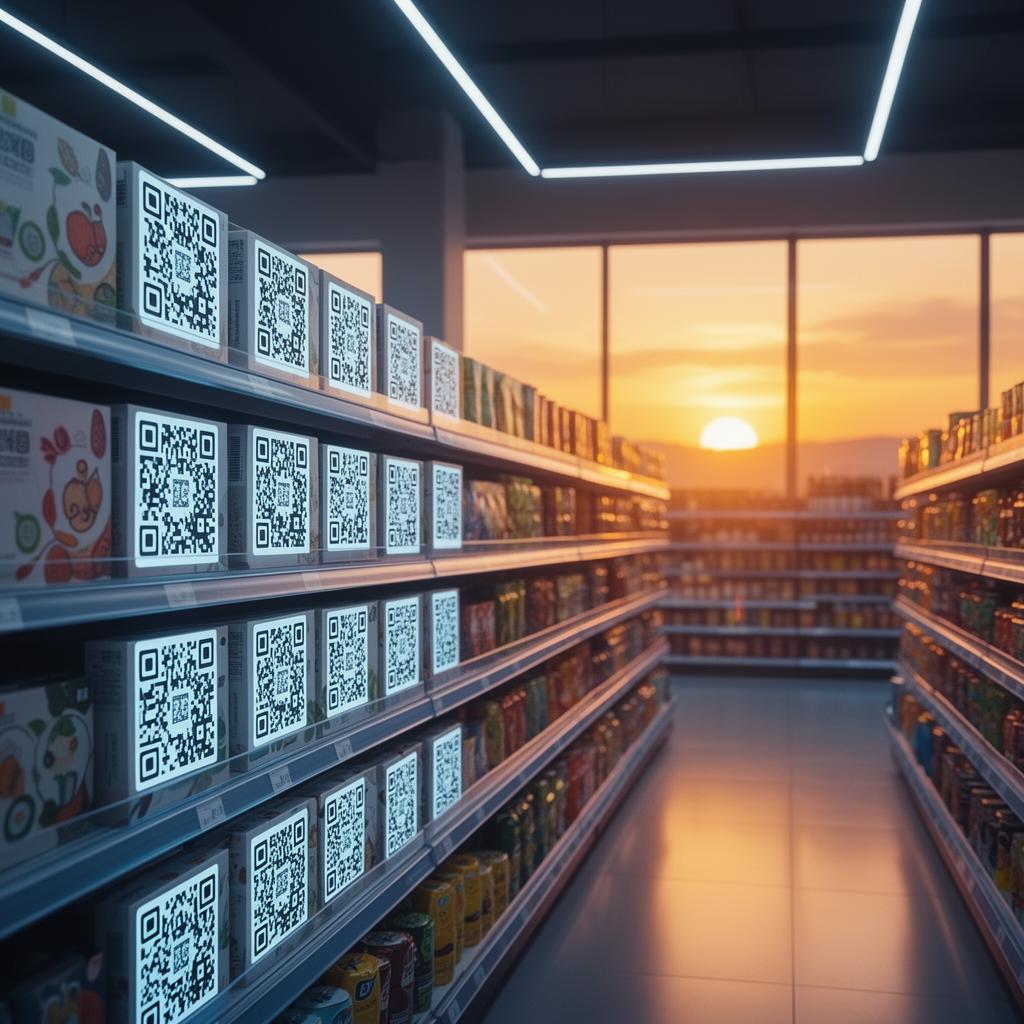
The Clock Is Ticking
The retail industry is facing one of its most significant operational shifts in decades. GS1 US, the organisation responsible for barcode standards worldwide, has issued a clear directive: by the end of 2027, every retailer must be capable of scanning 2D barcodes — including QR codes — at the point of sale.
This initiative, known as Sunrise 2027, marks the beginning of the end for the traditional 1D barcode that has dominated retail shelves for over 50 years. The one-dimensional barcode served its purpose admirably, but in an era of connected consumers and digital-first experiences, it simply cannot carry enough information to meet modern demands.
As Gena Morgan, Vice President of Standards at GS1 US, put it plainly in a September 2025 address to the convenience retail sector:
“The transition to 2D barcodes isn’t a question of if — it’s a question of when. And for retailers, ‘when’ is now.”
Consumer Demand Is Driving the Shift
This isn’t just a technology upgrade for its own sake. Consumer behaviour is fundamentally changing, and the data is striking:
- 76% of consumers want more product information, driven largely by rising food costs and increased health awareness
- 71% of shoppers now read product labels more frequently than they did two years ago
- 66% of consumers say they would scan a QR code on product packaging if it gave them access to useful information like nutritional details, sourcing, or allergen warnings
These aren’t niche behaviours — they represent a mainstream shift in how people interact with the products they buy. Consumers are actively seeking the kind of rich, digital product information that only 2D barcodes can unlock.
Three Phases: Crawl, Walk, Run
GS1 US recommends retailers approach the transition in three stages, acknowledging that different businesses will move at different speeds:
- Crawl: Upgrade point-of-sale scanners to optical/camera-based hardware capable of reading 2D barcodes. Update firmware and middleware to process the new data carriers. This is the minimum requirement by 2027.
- Walk: Begin leveraging the additional data that 2D barcodes carry — batch numbers, expiry dates, serial numbers — to improve inventory management, reduce waste, and enable faster product recalls.
- Run: Unlock the full potential of GS1 Digital Link-enabled QR codes, connecting products to dynamic digital experiences including loyalty programmes, personalised promotions, provenance data, and sustainability information.
The message from GS1 is clear: even if you’re only at the “crawl” stage, the time to start is now. Retailers who wait until 2027 risk being caught unprepared.
Private Label and Fresh Food: A Critical Consideration
For retailers who manufacture or distribute their own private label products, the implications are even more immediate. These retailers aren’t just scanning barcodes — they’re also creating them.
Private label and fresh food products will need 2D barcode labels that encode a GTIN (Global Trade Item Number) in GS1 DataMatrix or GS1 Digital Link QR code syntax. This means retailers need to work with their packaging suppliers and internal teams to ensure new labels are compliant well ahead of the deadline.
Fresh food is a particularly compelling use case. 2D barcodes can encode batch numbers and use-by dates directly, enabling automated markdowns for items approaching expiry and dramatically faster recall processes when food safety issues arise.
What SmartLinks Means for This Transition
The Sunrise 2027 initiative focuses on the ability to scan 2D barcodes at checkout. But the real opportunity lies in what happens when those barcodes are scanned by consumers — and that’s exactly where SmartLinks comes in.
A GS1 Digital Link QR code doesn’t just identify a product — it connects it to a digital experience. SmartLinks enables brands to create those experiences without any technical expertise:
- Product portals with rich media, ingredients, sourcing information, and sustainability credentials
- Digital Product Passports meeting upcoming EU ESPR regulations
- Authentication and anti-counterfeiting features that build consumer trust
- Loyalty and engagement tools that turn a simple scan into a lasting brand relationship
- Analytics and insights showing exactly how consumers interact with your products in the real world
As every product in every store gains a 2D barcode, the brands that have already built compelling digital experiences behind those codes will have an enormous competitive advantage.
The Bottom Line
Sunrise 2027 is not a distant prospect — it’s less than two years away. Retailers who haven’t started planning their scanner upgrades are already behind. And brands that haven’t considered what their products will say when consumers scan them are missing a once-in-a-generation opportunity.
The transition from 1D to 2D barcodes is the biggest change to product identification since the barcode was invented. The companies that move first will own the consumer relationship. The rest will be playing catch-up.
Ready to make your products scannable, smart, and connected? Get started with SmartLinks and be ready for Sunrise 2027.