E-Bike Manufacturing & Consumer Engagement
How an e-bike brand uses item-level identity: battery and motor detail attached to the bike, charging and service guidance for the rider, and a record that follows the bike through servicing and resale.
Illustrative only — we will model this against your SKUs on a walkthrough.
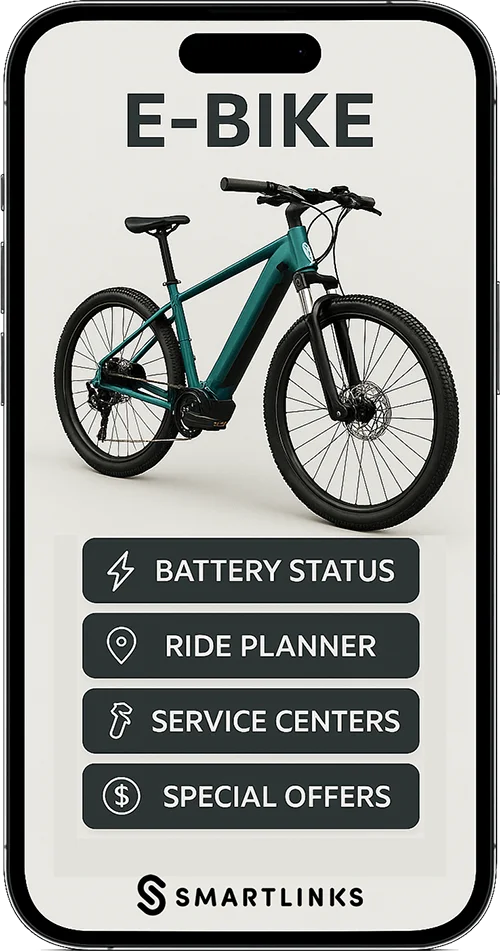
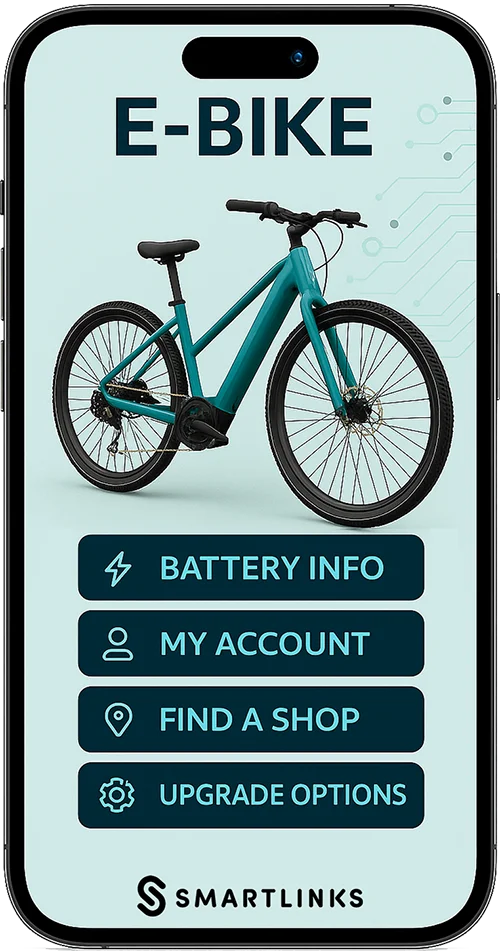
The flow, step by step
What happens from the first scan onwards, and who does what.
Powerful capabilities
Advanced features designed to streamline your operations and maximise efficiency.
Rider engagement
A direct channel to the person riding the e-bike
Point of sale on the bike
Charging solutions, components and services bought from the product
Battery records
Charge cycles, service events and replacement history held against the pack
Engagement analytics
See which guidance and offers riders actually open
Digital product passport
Specification and lifecycle documentation for the whole bike
Network integration
Charging, payment and service partners reachable from the scan
Where the value shows up
The mechanisms this flow creates, rather than a promised number.
The e-bike as a sales channel
Battery guidance, servicing and upgrades all have a natural home on the e-bike itself, which keeps the brand in the conversation after the sale.
Battery guidance where it is needed
Charging advice, health notes and range guidance delivered from the bike, with the charge and service record kept against the pack.
Buying from the e-bike
Charging accessories, battery replacements, components, cover and service packages reachable from the scan.
Insight you can act on
Riding and service data informs which upgrades and accessories to put in front of which riders.
Illustrative only — we will model this against your SKUs on a walkthrough.
What this changes day to day
The practical differences once each item carries its own identity.
See this modelled against your own products
Bring a few SKUs and we will walk through what e-bike manufacturing & consumer engagement would look like for your range.
Book a walkthrough