Furniture Manufacturing & Customer Engagement
How a furniture maker uses item-level identity: care and materials information attached to the piece, a route to matching items and protection products, and a provenance record that helps at resale.
Illustrative only — we will model this against your SKUs on a walkthrough.
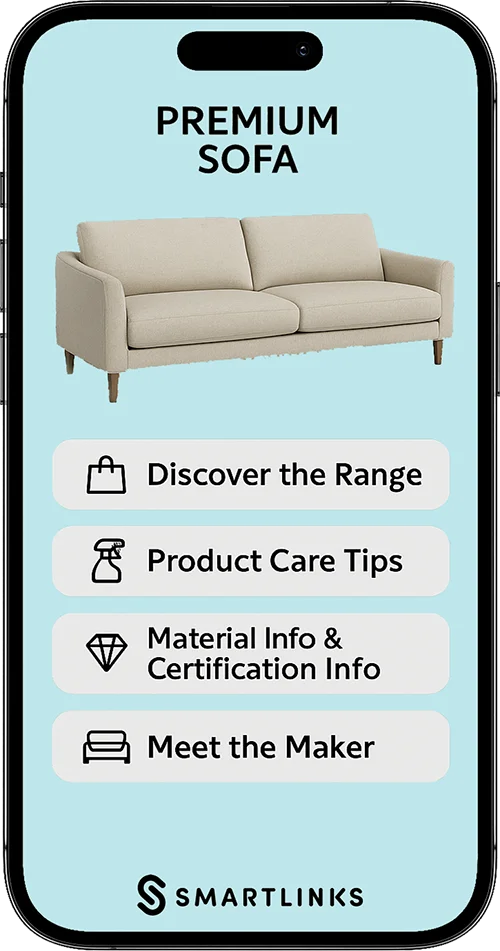
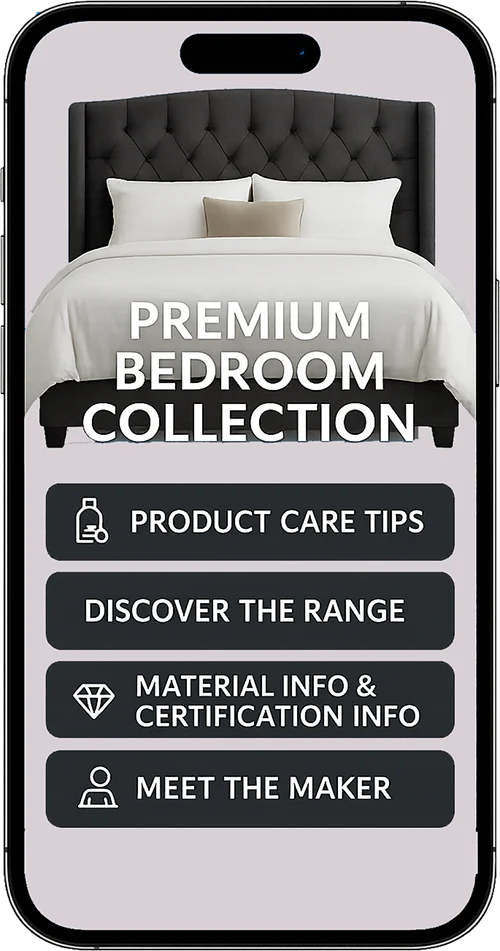
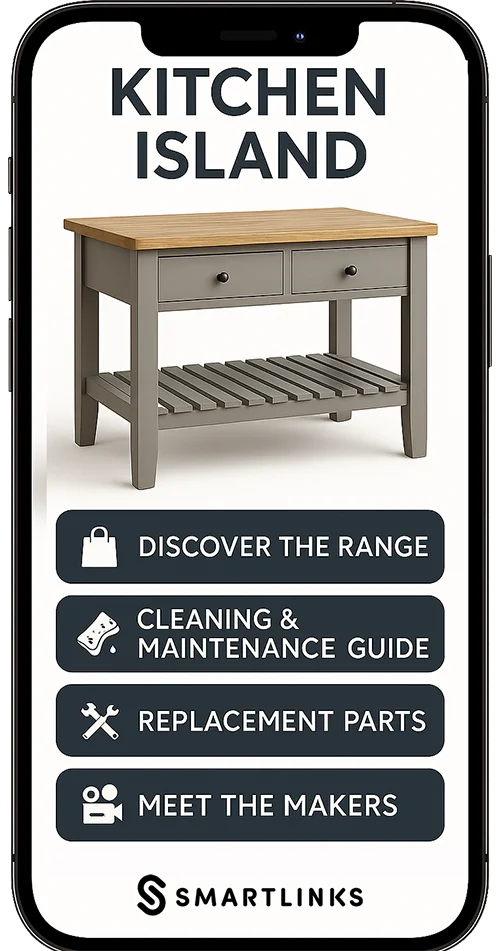
The flow, step by step
What happens from the first scan onwards, and who does what.
Powerful capabilities
Advanced features designed to streamline your operations and maximise efficiency.
Point of sale on the piece
Coordinating items and care products bought from the furniture itself
Owner engagement
Care instructions and styling content delivered to the person who owns the piece
Digital product passport
Materials, process and lifecycle documentation held against the item
Room coordination
Recommendations for matching pieces based on what the owner already has
Where the value shows up
The mechanisms this flow creates, rather than a promised number.
The product as a sales channel
Once each piece carries its own identity, the furniture itself becomes a place to answer questions, recommend coordinating items and sell care products — long after delivery.
A direct line to the owner
Care guides, seasonal maintenance notes, styling content and relevant offers reach the person who actually owns the piece.
Buying from the piece itself
A scan puts complementary furniture, care products, protection cover and room accessories in front of the owner at the moment they are thinking about the room.
A connected home record
Pieces reference each other, so recommendations reflect what the household already owns rather than a generic catalogue.
Illustrative only — we will model this against your SKUs on a walkthrough.
What this changes day to day
The practical differences once each item carries its own identity.
See this modelled against your own products
Bring a few SKUs and we will walk through what furniture manufacturing & customer engagement would look like for your range.
Book a walkthrough